
Having discredited the findings of the autopsy report by Dr Charles Dzamala and adopted an alternative approach to establishing the cause of Evison Matafale’s death on 27 November 2001, the Presidential Commission of Inquiry arrived at a different explanation of what caused Evison Matafale’s death.
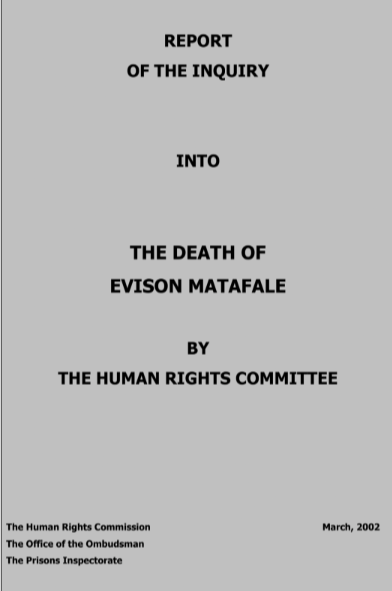
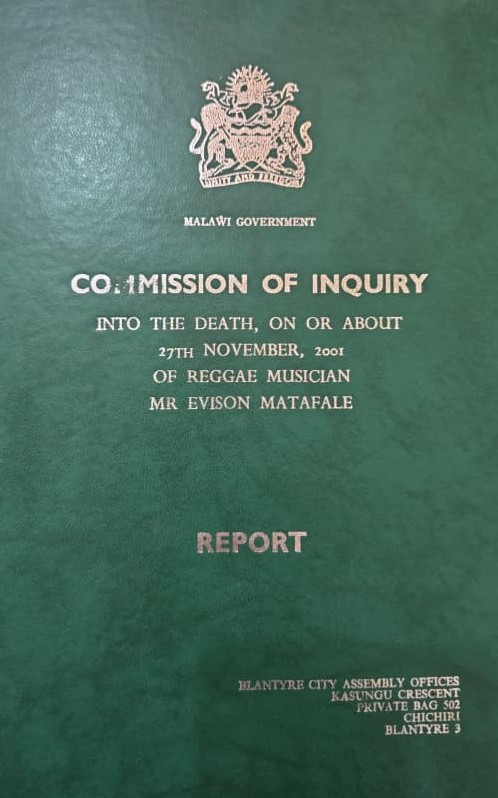
According to the Commission’s report, its conclusions were as follows:
- Matafale’s medical condition at the time of arrest
The Commission maintained that, by the time of his arrest at his home in Chileka (Blantyre) on 24 November 2001, Evison Matafale was already chronically ill. It further stated that he had active pulmonary tuberculosis and meningitis and had previously suffered from shingles.
- The Commission’s determination of the cause of death
Based on his clinical history and what it referred to as “other relevant information”, the Commission concluded that Evison Matafale most likely died of malaria and acute bronchitis/broncho-pneumonia.
WHAT DID THE COMMISSION CONCLUDE ABOUT ALLEGATIONS OF PHYSICAL TORTURE?
On allegations that Evison Matafale had been physically assaulted while in police custody leading to his death, the Presidential Commission of Inquiry reached conclusions similar to those of the Human Rights Committee of Inquiry established by the Malawi Human Rights Commission (MHRC).
The Presidential Commission of Inquiry concluded that:
- There was no credible evidence that Evison Matafale had been assaulted by the police or anyone else.
- Matafale did not complain about being assaulted to his father or brother, both of whom spoke to him while he was in police custody at Area 3 Police Station (Lilongwe) before being rushed to Kamuzu Central Hospital. Neither, according to the Commission, did he complain to any of the medical personnel who attended to him at Kamuzu Central Hospital, just hours before his death.
In dismissing the allegations of physical assault, the Presidential Commission made a particularly interesting argument on pages 123–124 of its report:
“Evison Matafale was known as a person who spoke out freely and without restraint; he would have complained loudly if he had been assaulted…”
This reasoning raises an important question: Can the absence of a complaint by a person in police custody, even to family members or medical personnel, be sufficient grounds to dismiss allegations of physical assault?