
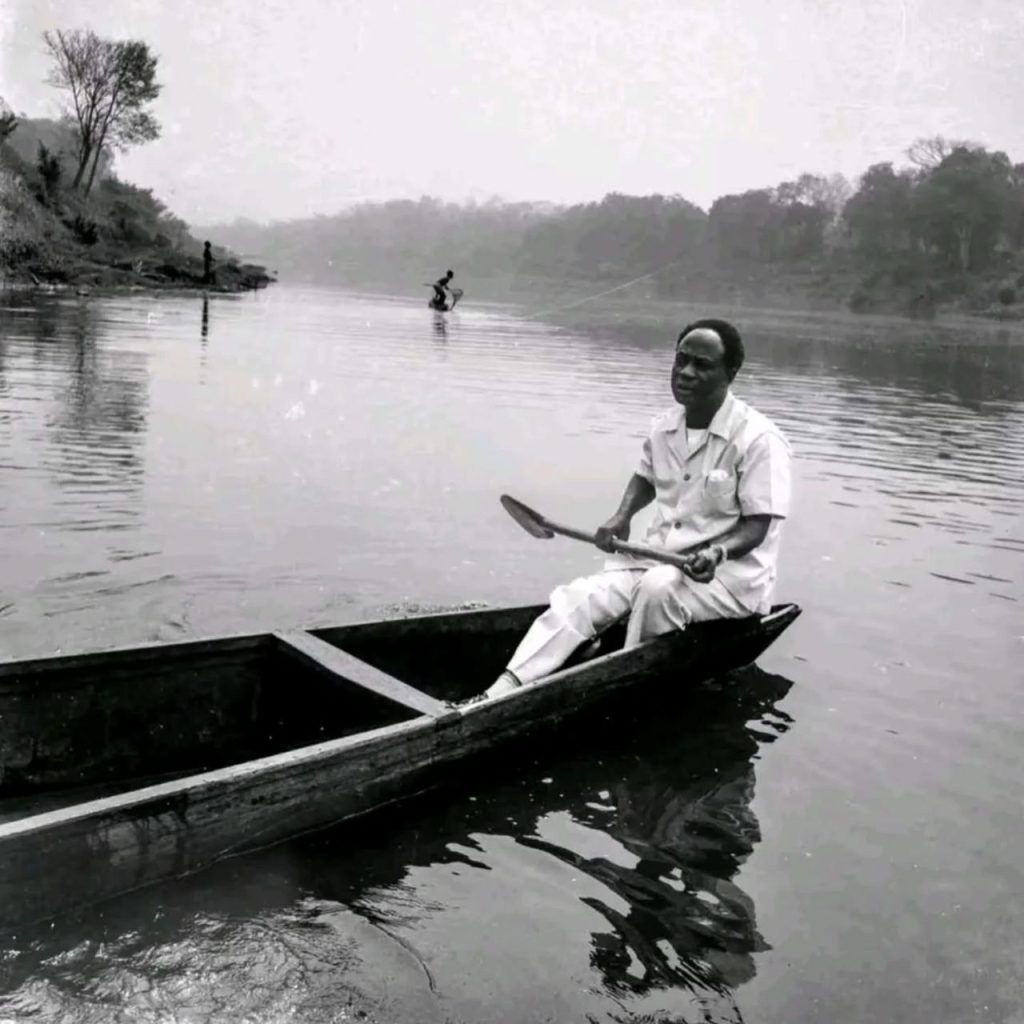
Sixty years today since the overthrow of Dr Kwame Nkrumah in Ghana.
Medson Silombela was a lieutenant of Malawi’s former Cabinet Minister Masauko Chipembere, who led an abortive armed uprising against Dr Kamuzu Banda’s government on 12 February 1965, in the aftermath of the 1964 Cabinet Crisis.
According to Prof. Colin Baker’s book ‘Revolt of the Ministers’ (2001), by the end of May 1965 Masauko Chipembere himself had already been clandestinely removed from Malawi to the United States of America by Malawi’s state security apparatus, acting in collaboration with CIA. Meanwhile, key figures in Chipembere’s armed group—including his brother, Austin Chipembere, as well as Matola Mtiesa and George Ndomondo—were in police custody. The only prominent figure still at large was Medson Silombela.
Silombela continued to wage guerrilla operations against Dr Kamuzu Banda’s government, evading capture for approximately six months. He was eventually apprehended in November 1965, swiftly tried, and sentenced to death. Dr Kamuzu Banda subsequently decreed that Silombela’s execution would be carried out in public.
The sentence drew international attention. On 10 January 1966, Ghana’s President, Dr Kwame Nkrumah, wrote a letter of compassion to Dr Kamuzu Banda. This was followed by a visit from Ghana’s High Commissioner to Malawi, T.K. Owusu, who conveyed President Nkrumah’s personal plea for clemency. Despite these diplomatic interventions, Silombela was hanged on 1 February 1966.
Shortly thereafter, diplomatic tensions escalated. On 16 February 1966, Dr Kamuzu Banda wrote to President Nkrumah requesting the immediate closure of Ghana’s mission in Malawi. It is doubtful that Dr Kwameh Nkrumah read the letter, as he was then on a state visit to China and, while still abroad, was overthrown in a military coup on 24 February 1966.
Earlier, on 20 February 1966, Dr Kamuzu Banda had announced his decision to close Malawi’s High Commission in Ghana. He cited the “urgent need to restrict government expenditure and the present shortage of trained personnel for Malawi posts abroad” as justification for the move.
Notably, Dr Kamuzu Banda selected 6 March 1966—Ghana’s Independence Day—to formally mark the termination of diplomatic relations between the two countries.
On Monday 28 February 1966, at a press conference held at State House in Dar es Salaam, President of Tanzania, Mwalimu Julius Nyerere, was asked whether he and his government would recognise the new regime in Ghana. While praising Dr Kwame Nkrumah as a patriot of Africa and a valiant fighter against neo-colonialism, Mwalimu Julius Nyerere made it clear that Tanzania would not extend recognition to new regimes that were coming to disrupt what he regarded as Africa’s genuine revolutionary trajectory, such as that which was being championed by Dr. Kwame Nkrumah in Ghana.
In contrast, three weeks later, on 23 March 1966, Dr Kamuzu Banda hosted a ceremonial reception in Malawi for a Ghanaian mission dispatched by the new military regime. The delegation included Sir Arku Korsah, former Chief Justice and leader of the mission; Mr Joe Appiah, a former member of the Ghanaian opposition; and Major General Otu, a senior officer in the Ghanaian armed forces.
The new military regime in Ghana had, in the immediate aftermath of President Nkrumah’s overthrow, dispatched several such missions to African and European capitals to consolidate diplomatic recognition.
Feedback: admin@historyofmalawi.com