
Malawi is this week hosting an important ecclesiastical visit from the Ethiopian Orthodox Tewahido Church (EOTC), one of the oldest Christian traditions in the world, as a delegation of the EOTC is in the country from 10–15 March 2026 to lay the spiritual and institutional foundations for the establishment of the EOTC in Malawi.
The delegation is led by Le’ake Siyuman Memhir Binyam, Head of the East African Diocese of the EOTC based in Kampala, Uganda. He is accompanied by Elder Anthony Samuel (Gebremedhin), the Diocesan Advisor on Evangelical Affairs. Their visit is guided by the theme: “Rooted in the Orthodox Tradition, Strengthening Pan-Africanism Through Faith.”
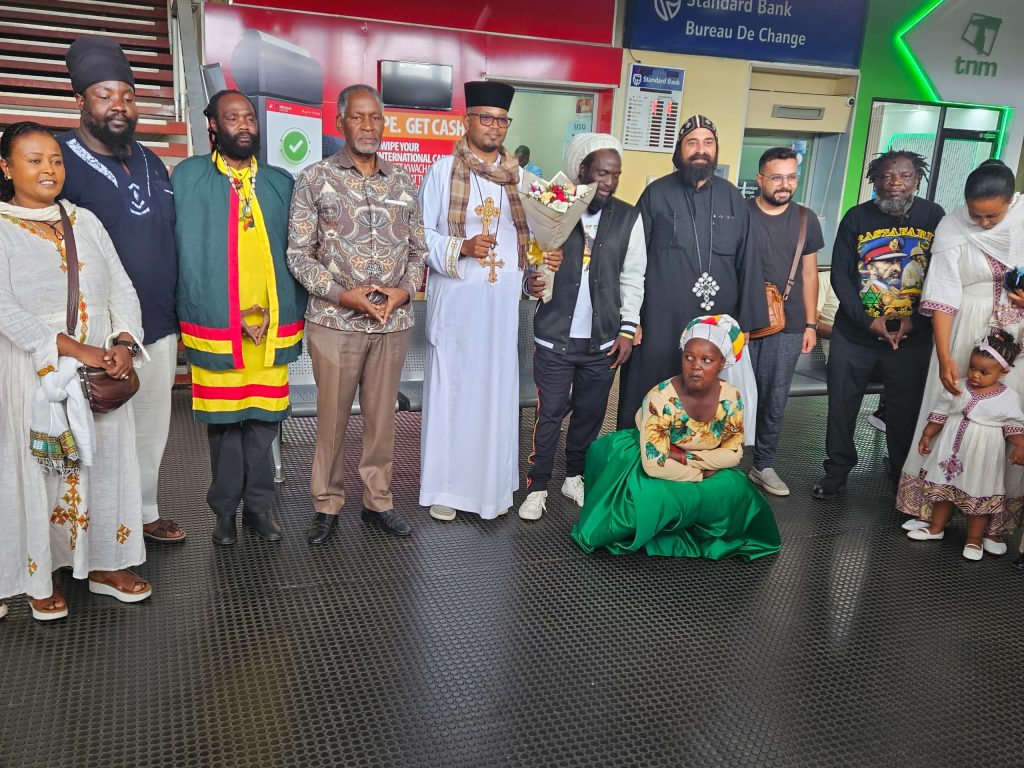
The mission seeks to introduce and formally establish the Ethiopian Orthodox Tewahido Church (EOTC) in Malawi through a series of engagements with religious communities, government institutions, academia, and the media. Among the key objectives of the visit are the laying of spiritual foundations for the EOTC in Malawi, initiating the process of formal registration with the Government of Malawi, strengthening ecumenical relations with other Christian denominations, and establishing local organisational structures that will ensure the sustainability of the Church’s presence in the country.
The delegation is also expected to meet members of the Ethiopian community in both Blantyre and Lilongwe, as well as representatives of the Rastafari community in the two cities. The visit will culminate on Sunday, 15 March 2026, with a morning worship service at Chitedze in Lilongwe to be led by Le’ake Siyuman Memhir Binyam. During this service, a number of Malawians are expected to undergo baptism into the EOTC.
Early discussions dating back to 2006
Efforts to establish the Ethiopian Orthodox Tewahido Church (EOTC) in Malawi have a longer history than the current visit may suggest. Initial discussions began in 2006 following conversations between Elder Anthony Samuel, an active member of the EOTC as well as a Rastafarian, and two Rastafari brethrens based in Blantyre who had expressed a deep interest in the EOTC.
Although those early discussions did not immediately lead to the establishment of a church structure, they planted seeds that would later bear fruit. About a decade later, one of the two Malawian Rastafari brethrens involved in the discussions became the first known Malawian to be baptised into the EOTC through the Southern Africa Diocese headquartered in South Africa.
(Further historical details surrounding this development are explored in a forthcoming book titled The History of the Rastafari Movement in Malawi by the Lost History Foundation (LHF), which is expected to be released in April 2026).
Renewed momentum after Emperor Haile Selassie anniversary event
The idea of establishing the EOTC in Malawi regained new momentum in 2025 when the Lost History Foundation organised a virtual international seminar commemorating the 60th anniversary of Emperor Haile Selassie’s visit to Malawi. The commemorative event, held on 15 July 2025, attracted participants from across the world.
Among those who attended were Le’ake Siyuman Memhir Binyam, who delivered the opening prayer, and Elder Anthony Samuel (Gebremedhin). Discussions that followed the event revived the earlier vision of establishing a formal EOTC presence in Malawi, eventually leading to the current visit by the church delegation.
An ancient African church with global reach
The EOTC is widely recognised as one of the earliest Christian churches in the world, tracing its origins to the 4th century when Christianity became the state religion of the ancient Kingdom of Aksum. Over centuries, the Church developed a distinctive theological and liturgical tradition rooted in ancient African Christianity.
Historically, the Ethiopian monarchy maintained a close relationship with the Church, and Emperor Haile Selassie I served as the titular head of the EOTC during his reign. His life of personal devotion to the Church has remained a defining feature of his legacy.
Since the 1970s, segments of the Rastafari movement across the world have developed a growing interest in the EOTC. This attraction is deeply connected to the life and example of Emperor Haile Selassie I, who was himself a devoted member of the EOTC.
In April 1966, Emperor Haile Selassie I made a historic visit to Jamaica. Four years later, in 1970, the Emperor authorised the deployment of Abune Yesehaq, a bishop of the EOTC, to Jamaica with the mandate to establish a branch of the Church in the Caribbean. This initiative opened a pathway for many Rastafarians to formally engage with the Ethiopian Orthodox tradition.
For some Rastafarians, joining the EOTC represents a way of honouring Emperor Haile Selassie I by following the spiritual path that shaped his life. The Rastafarians who undergo baptism in the EOTC do so in the name of Jesus Christ, in accordance with the doctrines of the EOTC.