
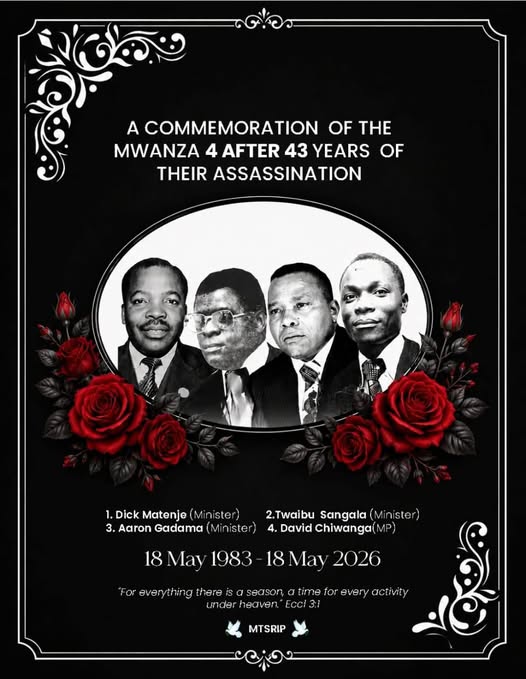
As Malawi commemorates the memory of the Mwanza Four today, it is important to remember how music also became a powerful medium for preserving the history of political struggle and resistance during and after the authoritarian one-party state era in Malawi.
In 1993, Lucius Banda travelled to Johannesburg (South Africa) to study music. While there, he began recording his debut reggae album, Son of a Poor Man . The album became one of the earliest reggae albums produced by Malawian artists.
The album carried bold political messages at a time when open criticism of the government had long been suppressed. Through a song Mabala (wounds), Lucius Banda condemned oppression and spoke against the injustices of the authoritarian one-party state.
In 1995, he released his second reggae album, Down Babylon. Among the notable tracks on the album was Mizimu (spirits) a tribute to the three cabinet ministers — Dick Matenje, Twaibu Sangala, and Aaron Gadama — together with Member of Parliament David Chiwanga, collectively remembered as the Mwanza Four. The four political figures were assassinated on 18 May 1983 during the one-party state era.
By dedicating Mizimu to the Mwanza Four, Lucius Banda ensured that reggae music also became part of the national process of remembrance, historical reflection, and the demand for justice and truth.
For more details on the history of reggae music in Malawi, get a copy of the book The Rastafari Movement in Malawi: From One-Party State Era & Beyond authored by Dr. Paliani Chinguwo.
Copies of the book are available on Amazon, while hard copies are also accessible within Malawi. For enquiries, interested readers may contact: +266 5964 2284.
# Lost History Foundation.